Give each stage a job
To test perfume in a store, start with a few labeled paper strips, choose one or two favorites for skin, and leave yourself time to smell them again before buying. Paper helps you decide what deserves a closer look. The skin trial helps you decide whether you want to wear it.
Treat the visit as a selection exercise. You do not need to name every ingredient, rank an entire counter, or find a winner immediately. A useful result might be one sample to investigate further, or the discovery that the sweet fragrances you expected to enjoy are less appealing than greener options.
Arrive with a small, contrasting shortlist
Choose three starting directions, such as bright citrus, leafy woods, and warm vanilla. Three is a practical starting point for keeping your notes manageable, rather than a scientific limit. Ask the assistant for one example of each within your budget. Explain where you expect to wear the perfume and mention a familiar scent you like or dislike.
For the clearest comparison, arrive without another perfume on the places you intend to test. Bring a pen or use your phone for notes. Decide beforehand whether you are exploring freely or replacing a specific bottle: an everyday work fragrance and a perfume for occasional evenings present different buying questions.
Label the exact bottle before spraying
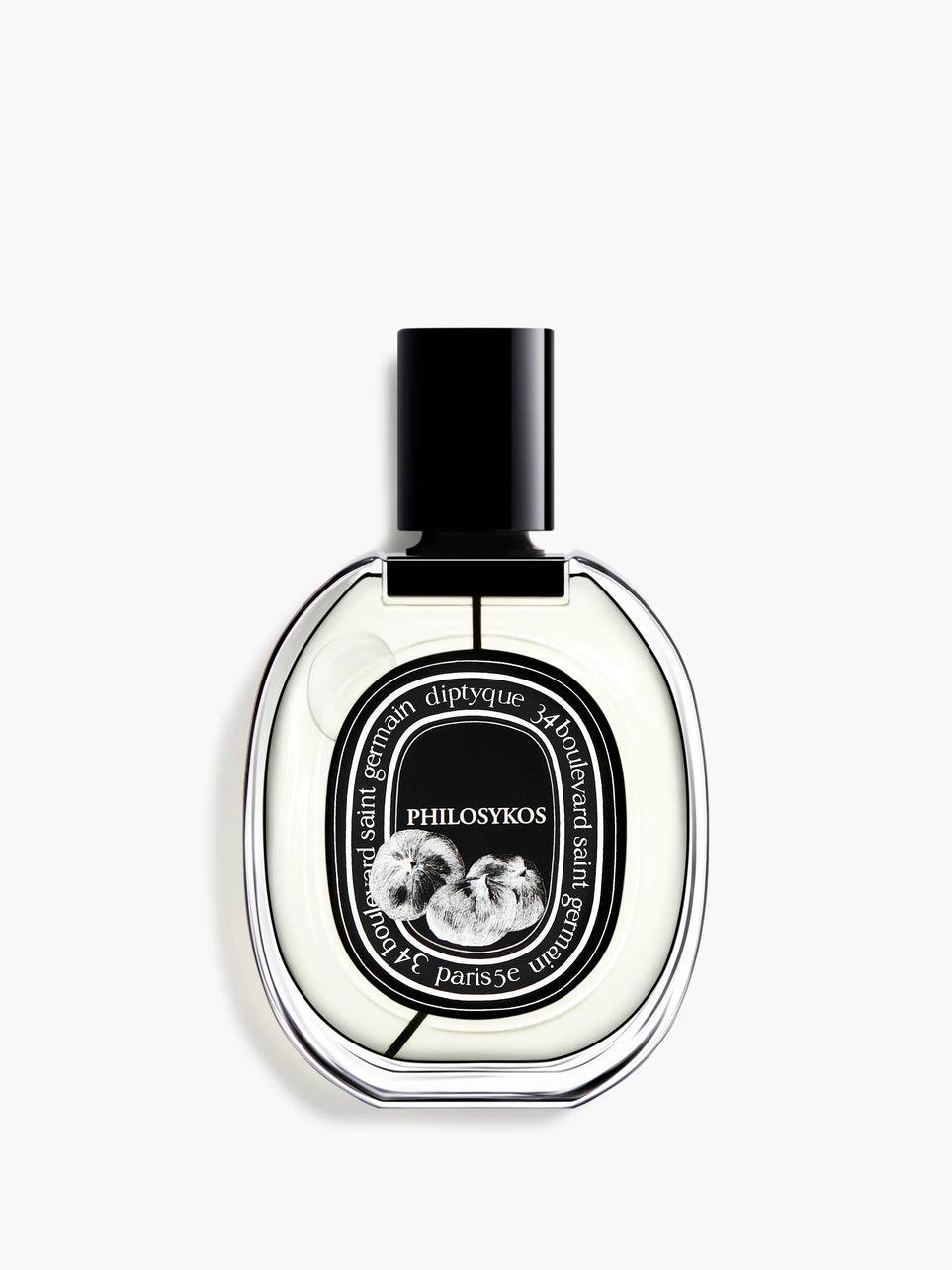
Write the brand, fragrance name, and concentration on each strip before it is sprayed. Include any additional version name printed on the bottle. A label such as Philosykos Eau de Parfum is more useful than simply Diptyque or fig. Photograph the tester label if the name is long or unfamiliar.
Diptyque lists Philosykos in both eau de toilette and eau de parfum. The house also explains that its eaux de parfum can reinterpret the composition rather than simply increase the concentration of an eau de toilette. Check the version on any sample or bottle you later consider buying; liking one does not settle your preference for the other.
Use paper to eliminate, then compare
Ask for a separate strip for each candidate. Let the sprayed area dry before bringing it near your nose, and keep the strips apart. Smell one at a time rather than holding a bundle together. Set aside any fragrance you clearly dislike instead of repeatedly revisiting it because its description sounded promising.
Write one plain observation and one decision beside each name: sharp citrus, try on skin; soft floral, uncertain; very sweet, pass. These are personal impressions, so ordinary words are enough. If everything starts to seem indistinct, stop the comparison and take a break away from the counter. There is no need to finish the shortlist in one sitting.
Reserve skin for the finalists
Perfumer Sylvaine Delacourte recommends a skin trial and allowing a fragrance time to develop before committing to a bottle. Use your remaining time for the strongest candidate, or compare two finalists on separate wrists or forearms. Ask the assistant which tester they are applying and note which side received it.
Keep the amount modest and avoid adding another perfume to the same spot. Record the application time. For a two-scent comparison, aim for comparable applications so that an extra spray does not become the main difference you notice. If only one candidate interests you, there is no benefit in filling the other wrist just to complete a pair.
Take the decision beyond the counter
Leave the display and continue with your day before returning to the question of buying. As a practical schedule, check again after roughly half an hour, later that afternoon, and in the evening if the scent remains noticeable. Those checkpoints organize your observations; they do not promise a particular development time or duration.
Ask whether you still enjoy the smell, whether you keep wanting to notice it, and whether it suits the occasion you had in mind. Separate enjoyment from strength in your notes. A fragrance can remain easy to detect while becoming less appealing, and a quieter scent can still be the one you prefer.
Leave with a clear next step
If you remain interested, ask whether a sample of the exact version is available and whether it is complimentary or paid. Do not assume the store offers one. Photograph the bottle and record the size and quoted price so you can compare the same item later without relying on memory.
Buy when you have enough evidence for your own decision. If you love the first impression but have not checked the later scent, another visit or a sample is a useful next step. If neither finalist feels right, keep the notes about what failed. They give the next assistant a better starting point than another list of popular bottles.